
Manipal Academy of Higher Education (MAHE)
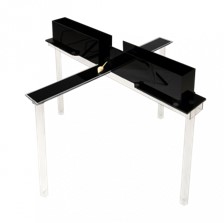
Elevated Plus Maze (EPM) for Mice with Camera
Equipment Model
Description
The Elevated Plus Maze (EPM) for mice is a behavioral apparatus designed to assess anxiety-like behavior in rodents. The maze consists of two open arms and two closed arms arranged in a plus (+) configuration and elevated above the floor. This setup leverages the natural aversion of mice to open and elevated spaces, providing insights into their anxiety levels. The apparatus is equipped with a Logitech C270HD webcam to monitor and record the animal's movements for subsequent analysis.
Lab
MW Room - 3
Institute
Central Animal Research Facility
Location
Central Animal Research Facility, Opposite MSLS, Eshwar Nagar, Manipal, Udupi, Karnataka 576104, India
Applications
Neuroscience Research: Evaluating the effects of genetic modifications or pharmacological agents on anxiety-related behaviors.
Psychopharmacology: Screening potential anxiolytic or anxiogenic compounds by observing changes in arm exploration patterns.
Behavioral Genetics: Studying strain differences in anxiety responses and exploratory behaviors.
Toxicology Studies: Assessing neurobehavioral toxicity by monitoring changes in anxiety-like behaviors.
Developmental Biology: Investigating the impact of developmental interventions or exposures on adult anxiety levels.
Key Features
Standardized Design: Comprises two open arms and two closed arms (typically 30 cm in length and 5 cm in width), elevated 50 cm above the floor.
Video Monitoring: Equipped with a Logitech C270HD webcam providing 720p resolution for accurate tracking of rodent movements.
Quantitative Metrics: Measures parameters such as time spent in open vs. closed arms, number of entries into each arm, and total distance traveled.
Software Integration: Compatible with behavioral analysis software for automated tracking and data analysis.
Non-Invasive Assessment: Allows for the evaluation of anxiety-like behaviors without the need for invasive procedures.
Limitations
Environmental Sensitivity: Results can be influenced by external factors such as lighting, noise, and room temperature, necessitating controlled testing conditions.
Habituation Effects: Repeated testing may lead to habituation, affecting the reliability of longitudinal studies.
Interpretation Challenges: Differentiating between anxiety and general locomotor activity can be complex, requiring complementary tests for comprehensive analysis.
Equipment Calibration: Accurate tracking depends on proper calibration and positioning of the camera and software settings.
Species and Strain Variability: Behavioral responses can vary significantly between different mouse strains, impacting the generalizability of results.
Pricing
₹50
This instrument has 1 available procedures. Please select a procedure to book the instrument.
Select ProcedureProcedures
All procedures available for this instrument are listed below.
Availability
View the current availability for this instrument. Red slots indicate booked times.
August 2026
Available
Booked
Unavailable