
Manipal Academy of Higher Education (MAHE)
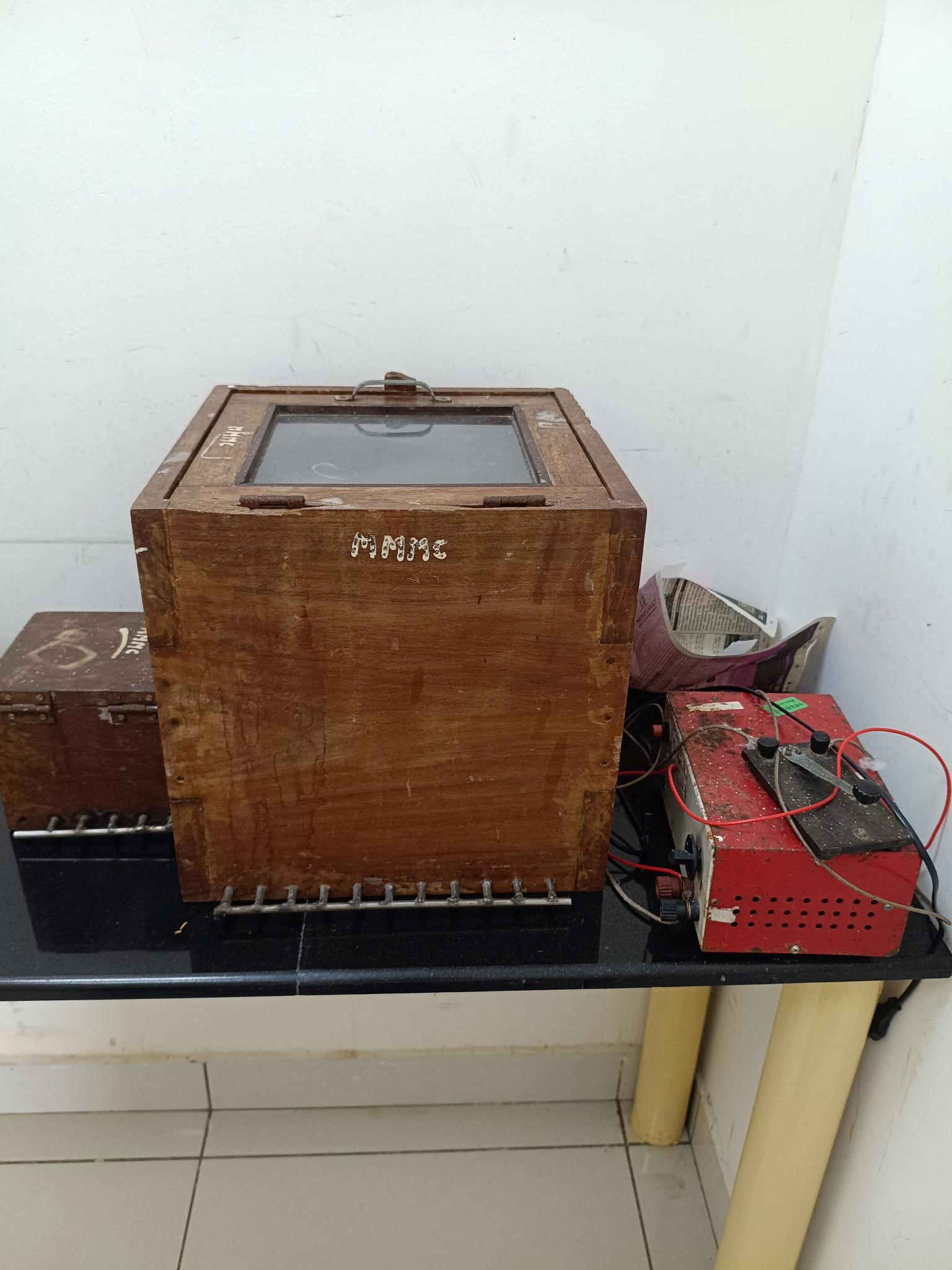
Passive Avoidance Response Apparatus
Equipment Model
P ID-0000248003
Description
The Passive Avoidance Response Apparatus is a behavioral tool designed to assess fear-motivated learning and memory in rodents. It typically consists of two compartments: a brightly lit chamber and a dark chamber, separated by a sliding door. Rodents naturally prefer dark environments; however, upon receiving a mild aversive stimulus (e.g., foot shock) in the dark chamber, they learn to avoid re-entering it. This apparatus allows researchers to measure the latency to enter the dark compartment, providing insights into the animal's learning and memory capabilities.
Lab
MW Room - 3
Institute
Central Animal Research Facility
Location
Central Animal Research Facility, Opposite MSLS, Eshwar Nagar, Manipal, Udupi, Karnataka 576104, India
Applications
Neuroscience Research: Evaluating the effects of genetic modifications or pharmacological agents on fear-based learning and memory.
Psychopharmacology: Screening potential cognitive enhancers or impairers by observing changes in avoidance behavior.
Behavioral Genetics: Studying strain differences in fear conditioning and memory retention.
Toxicology Studies: Assessing neurobehavioral toxicity by monitoring changes in avoidance learning.
Developmental Biology: Investigating the impact of developmental interventions or exposures on adult cognitive functions.
Key Features
Dual-Chamber Design: Comprises a brightly lit chamber and a dark chamber, facilitating the assessment of avoidance behavior.
Automated Sliding Door: Allows precise control over the animal's access between compartments.
Aversive Stimulus Delivery: Equipped to deliver a mild foot shock in the dark chamber to facilitate learning.
Quantitative Metrics: Measures latency to enter the dark compartment, time spent in each chamber, and number of entries.
Software Integration: Compatible with behavioral analysis software for automated tracking and data analysis.
Non-Invasive Assessment: Allows for the evaluation of learning and memory without the need for invasive procedures.
Limitations
Environmental Sensitivity: Results can be influenced by external factors such as lighting, noise, and room temperature, necessitating controlled testing conditions.
Stress Induction: The use of aversive stimuli may induce stress, potentially affecting the animal's behavior and well-being.
Interpretation Challenges: Differentiating between memory deficits and changes in anxiety or exploratory behavior can be complex, requiring complementary tests for comprehensive analysis.
Species and Strain Variability: Behavioral responses can vary significantly between different rodent species and strains, impacting the generalizability of results.
Equipment Calibration: Accurate tracking and stimulus delivery depend on proper calibration and maintenance of the apparatus.
Pricing
₹100
This instrument has 1 available procedures. Please select a procedure to book the instrument.
Select ProcedureProcedures
All procedures available for this instrument are listed below.
Availability
View the current availability for this instrument. Red slots indicate booked times.
August 2026
Available
Booked
Unavailable